Hello Kitty: Kids Hospital
Hippo Kids GamesEducational
4.81.17K Reviews
- Version
- 1.10.7
- Installs
- 10.00M
- Age Rating
- Everyone
Screenshots
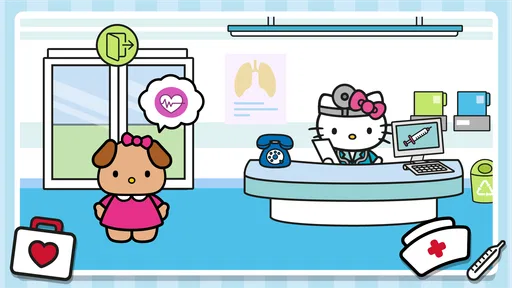
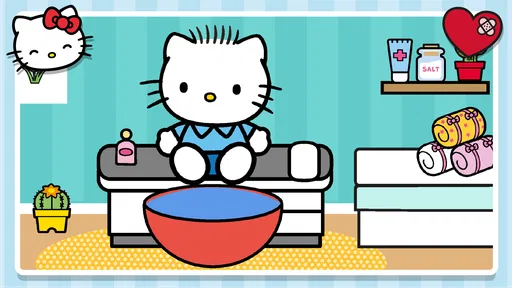
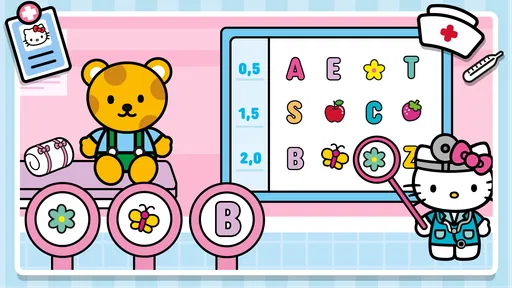
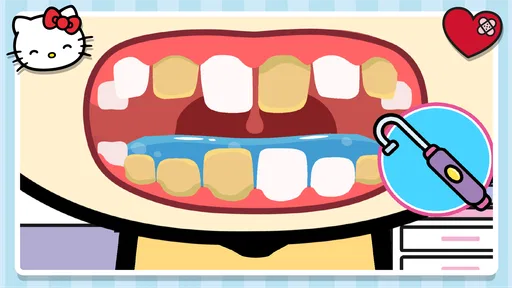
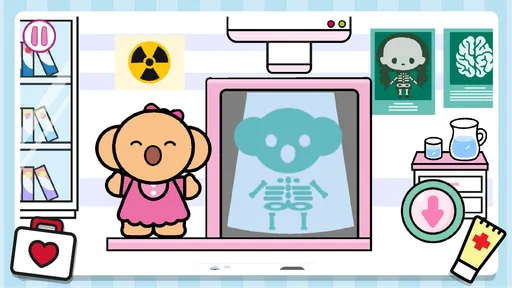
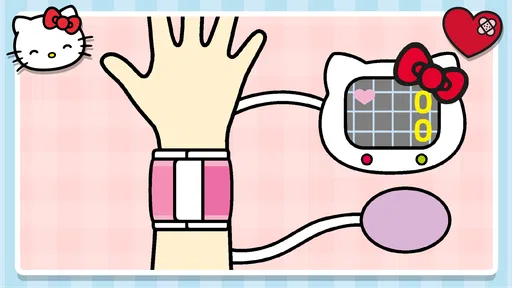
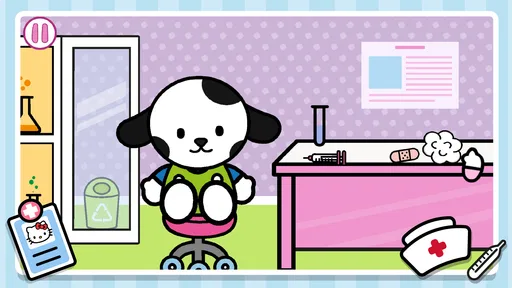
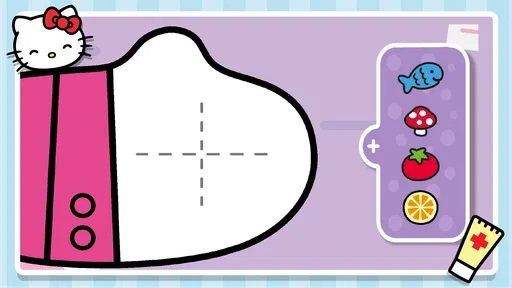
Our Review of Hello Kitty: Kids Hospital
 Analysis by Appyee
I spent time with Hello Kitty: Kids Hospital as a light educational game for children, and my first impression was clear: it is designed to make hospital care feel friendly rather than frightening. The familiar Hello Kitty setting gives the medical theme a soft, approachable tone, while the activities encourage children to think about patients, treatment, and caring for others. It is not trying to replace a serious learning tool or teach real medical practice. Instead, it turns a potentially intimidating subject into simple, playful interaction.
The game comes from Hippo Kids Games and is available for free, with optional in-app purchases ranging from $0.99 to $9.99 per item. That distinction matters. A child can try the experience without an upfront payment, but families should still look at the purchase controls before handing over the device. The age rating is Everyone, which fits the gentle presentation and child-focused subject matter.
A friendly hospital setting built for early learners
The central idea is easy to understand: children learn about treating patients in a kids’ hospital alongside Hello Kitty. That theme gives the game a useful emotional advantage. Medical vocabulary and hospital routines can seem complicated when presented directly, but familiar characters and colorful situations make the subject less formal. In my experience, that makes it easier for a young player to stay curious instead of feeling as if they are completing a lesson.
I would describe it as an educational role-playing experience rather than a detailed simulation. The appeal comes from taking part in caring for patients, following the logic of treatment, and seeing a hospital as a place where people help one another. The game’s strongest teaching opportunity is not advanced medical knowledge; it is the connection between observation, responsibility, and kindness.
That difference is important for parents choosing between this and a conventional learning app. A flashcard application may be better for memorizing body parts or health terms. A realistic simulation may offer more technical depth. This game sits somewhere else: it uses a familiar character and a playful hospital scenario to introduce the idea of care through interaction.
The presentation also makes it suitable for children who are curious about doctors but may be nervous about visiting a clinic. Playing through a harmless version of patient care can give them a chance to discuss what happens at a hospital in a relaxed setting. I would not treat it as a substitute for explaining a real appointment, but it can be a useful conversation starter.
How the free model affects the experience
The download is free, so the sensible approach is to let a child sample the game before deciding whether it deserves a place on the device. That is a better value proposition than paying immediately for a concept that may not match the child’s interests. The free entry point also works well for families who want a short, low-risk educational activity rather than a major long-term game.
The optional purchases change the value calculation. I would avoid promising that every part of the experience is available without spending, because the important question for each family is how much content the child can comfortably use before wanting something additional. The listed purchase range gives parents a clear warning that the game is free to start, not necessarily a completely unrestricted free experience.
For that reason, I recommend checking purchase settings before play and agreeing on a simple rule: either the child plays only the free content or asks an adult before selecting anything extra. This is not a criticism unique to this title; it is simply the practical side of giving a child a free game with optional purchases. The best value comes when the adult controls the spending decision rather than leaving it to impulse.
There is no need to buy anything just to understand the basic appeal. If a child enjoys helping the characters and talking about the hospital theme, the free access has already delivered a worthwhile trial. If the child loses interest quickly, the family has avoided paying for a game that was never a good match.
What children can take from the hospital theme
The most valuable learning here is contextual. Instead of presenting care as an abstract idea, the game places it inside a hospital story. A child can begin to connect patients with attention, treatment, and reassurance. That creates opportunities for parents to ask useful questions: Why does a patient need help? What should we do when someone feels unwell? Why is it important to listen carefully?
Those conversations are where the educational value can grow beyond the screen. I found the game more useful when treated as a shared activity rather than a digital babysitter. Even a few minutes of discussion after a session can turn a simple hospital scenario into practice for empathy and communication.
One practical use is preparing a child for an ordinary checkup. A parent could play together before the visit, then explain which parts are similar and which parts are different in real life. This approach helps keep expectations realistic: the game can make the setting feel familiar, but it cannot guarantee that a real appointment will follow the same steps.
Another useful situation is helping siblings talk about illness without making the conversation frightening. The Hello Kitty style keeps the tone gentle, while the patient-care theme gives children a reason to think about how they would support someone else. It is especially suitable for short sessions when a child needs a calm activity with a clear subject.
A less obvious strength is that the game can encourage role reversal. Children who normally feel powerless around medical decisions get to act as helpers inside the game. That does not give them real responsibility, of course, but it can make the idea of treatment feel understandable and less mysterious. Parents can build on that by explaining that real doctors and nurses use training, teamwork, and careful rules.
Where it differs from ordinary educational games
Many educational games focus on a single measurable skill, such as spelling, counting, matching, or memory. This one uses a broader theme. Its learning is tied to sequence, attention, and social understanding rather than a narrow academic target. If your priority is early mathematics or reading practice, another category of app will probably provide clearer progress.
Compared with a generic pretend-play game, the hospital setting gives the activities more direction. The child is not simply decorating a room or moving characters around without context; the setting suggests that actions should be connected to helping patients. That structure is useful for children who enjoy stories but need a reason to keep moving through an activity.
Compared with a serious medical simulator, however, the Hello Kitty approach is intentionally simplified. I would choose it for emotional accessibility, not technical accuracy. A teenager interested in anatomy, first aid, or a healthcare career would likely outgrow it quickly and benefit more from an age-appropriate educational resource with deeper explanations.
The character branding is both an advantage and a limitation. Children who already like Hello Kitty may be drawn into the hospital theme immediately. Children who do not care about the character may see less reason to continue. The game’s educational idea has merit on its own, but the familiar personality is clearly part of the experience’s appeal.
Small details that improve the way I would use it
I would begin by playing beside the child, not because the game is difficult, but because the first session reveals what the child actually notices. Some children will focus on the characters, while others will ask questions about patients and treatment. Watching that reaction helps a parent decide whether to emphasize emotional support, hospital routines, or simple play.
I would also use short sessions instead of presenting it as a long lesson. The hospital theme works best when it remains fresh. A brief visit to the game followed by a real-world conversation can be more valuable than leaving a child to repeat the same type of activity until the novelty disappears.
A third useful habit is to separate fantasy from reality without spoiling the fun. When the child describes what happened to a patient, I would respond with curiosity first and then add a simple real-world explanation. For example, the parent can acknowledge the game’s solution while noting that real healthcare workers examine people carefully and make decisions based on training. This preserves imaginative play while preventing the child from treating the game as medical instruction.
There is also a practical device-sharing advantage. Because the theme is easy to explain, an adult can join for a few minutes even without knowing the game beforehand. That makes it more suitable for a quick parent-child activity than a complicated title that requires a long tutorial. The trade-off is that children looking for a deep, open-ended game may find the structure too guided.
Limits parents should understand before choosing it
The game’s gentle tone should not be confused with comprehensive health education. It does not belong in the same role as a doctor’s advice, a first-aid course, or a carefully structured school curriculum. If a child asks what to do during a real emergency, the answer should come from a trusted adult or qualified professional, not from a game scenario.
The free-to-play structure is another point of friction. Optional purchases can be harmless when managed by an adult, but they can interrupt the feeling of independent play if a child repeatedly encounters something they cannot access. Before installation, I would decide whether the child should request permission for purchases or play with them disabled through the device’s family controls.
The game may also be less satisfying for children who want challenge, competition, or detailed progression. Its purpose is comfort and simple learning, not intense difficulty. That is a strength for younger players and a weakness for anyone expecting a demanding game with complex strategy.
Storage and device compatibility are straightforward considerations. It supports Android 7.0 and later, so owners of older devices should check the operating system before trying it. The current version is 1.10.7, which is useful to know when comparing the installation with an older phone or tablet. I would still make sure the device has enough room and that the child has a stable setup for play, especially if the game is intended for travel or waiting-room use.
The Everyone rating makes it a reasonable candidate for a shared family device, but an age label cannot tell a parent whether the tone suits a particular child. Some children may find hospital themes comforting; others may be sensitive to anything involving illness. I would introduce it gently and watch the reaction rather than assuming that a cute presentation will work equally well for everyone.
Who is most likely to get good value
I think the best audience is a young child who enjoys pretend play, recognizes Hello Kitty, and is beginning to ask questions about doctors or hospitals. For that child, the game combines a familiar character with a setting that encourages caring behavior. It can work particularly well as a calm activity before or after a medical visit, provided an adult explains that the game is only a playful version of healthcare.
It is also a good fit for parents who want an educational game that does not feel like a worksheet. The title gives them an opening to discuss empathy, listening, and helping others without turning every minute into a formal lesson. The free starting point makes it easy to test that fit before spending anything.
I would be more cautious if the child dislikes guided activities, has no interest in Hello Kitty, or expects a game with constant rewards and escalating difficulty. I would also skip it for a child who needs a focused academic tool. In those cases, a reading, mathematics, language, or science app designed around a specific skill would offer clearer value.
Older children should probably look elsewhere unless they simply enjoy the character or want relaxed pretend play. The hospital theme may still be pleasant, but the educational depth is aimed at early learners. Likewise, adults looking for realistic medical information will find the simplified approach too limited for that purpose.
My verdict on downloading and spending
With an average rating of 4.8 from around 30 thousand ratings and more than 10 million installs, the game has clearly reached a large audience. Those figures suggest strong interest, but they do not replace a personal fit test. The important question is whether your child enjoys the combination of Hello Kitty, patient care, and gentle educational play.
My recommendation is to try the free version first and treat the optional purchases as a separate decision. The free access is enough to judge the tone, the child’s interest, and the usefulness of the hospital theme. I would only consider spending if the child returns to the game willingly and the additional content genuinely adds value for your family, rather than buying simply because a locked option creates pressure.
For me, the strongest reason to recommend it is emotional accessibility. It makes a hospital setting less severe and gives children a playful way to think about helping patients. The strongest reason to hesitate is that its learning is broad and gentle, so it cannot replace a focused educational tool or real medical guidance.
My final advice is simple: download it for a child who wants friendly pretend play with a caring theme, but keep expectations modest and purchases deliberate. Hippo Kids Games has created a free starting point that can be valuable in short, supervised sessions, especially when parents use the game to begin conversations about doctors, treatment, and empathy. If that is the experience you want, it is worth trying. If you need deep lessons, serious simulation, or a completely purchase-free environment, another option will serve you better.
Verdict
Strengths of Hello Kitty: Kids Hospital
- Simple controls make it easy for young children to play independently.
- Friendly hospital setting introduces basic care routines without realistic medical imagery.
- Bright characters and animations keep short play sessions engaging.
- Activities are generally calm and suitable for preschool-age players.
- Works well as a casual distraction during travel or waiting times.
Limitations of Hello Kitty: Kids Hospital
- Some activities may feel repetitive after several play sessions.
- The app may offer limited challenge for older children.
- Certain features or content may require additional purchases.
- Frequent prompts can encourage children to continue playing longer.
- Performance may vary on older phones or tablets.
Other Releases by Hippo Kids Games
View All
Vlad & Niki Supermarket game
Educational4.7

Hello Kitty: Good Night
Educational4.8

Hello Kitty: Beauty Salon
Educational4.4

Vlad and Niki: Kids Piano
Music4.7
Similar Picks in This Category
View All
Little Panda Policeman
BabyBus4.0

Monster Trucks Game for Kids 2
Raz Games4.1

Little Panda's Chinese Recipes
BabyBus4.4

Little Panda's Restaurant
BabyBus4.4

Little Panda's Ice Cream Games
BabyBus4.3

Baby Panda Care
BabyBus3.8
Frequently Asked Questions
What is Hello Kitty: Kids Hospital?
Hello Kitty: Kids Hospital is a child-friendly mobile game in which players explore a colorful hospital and help adorable characters with different medical needs. Children can interact with Hello Kitty and other familiar Sanrio friends, complete simple treatment activities, and learn basic ideas about caring for others. The gameplay is designed to feel gentle, playful, and easy to understand rather than realistic or difficult.
Is Hello Kitty: Kids Hospital suitable for young children?
The game is generally aimed at young children, especially preschool and early elementary-age players who enjoy Hello Kitty and pretend-play activities. Its colorful visuals, simple controls, and straightforward tasks make it accessible even for children with limited gaming experience. Parents should still check the listed age rating, language options, and available activities because suitability may vary depending on the child’s age and sensitivity to hospital-themed content.
Does Hello Kitty: Kids Hospital require an internet connection?
An internet connection may be needed for the initial download, updates, advertisements, account-related features, or optional purchases, depending on the version installed and the device platform. Some basic activities may work offline after the game has loaded, but this should not be assumed for every feature. It is best to launch the game once while connected and review its current requirements before allowing offline play.
Are there in-app purchases or advertisements in Hello Kitty: Kids Hospital?
The availability of advertisements and in-app purchases can depend on the publisher, region, operating system, and current release. Some versions may offer optional items, additional content, or ad removal rather than requiring payment to begin playing. Parents should review the store listing and device purchase settings before installation. Enabling parental controls is recommended, particularly when the game is being used by younger children.
Can children play Hello Kitty: Kids Hospital without adult help?
Most of the game’s basic activities are designed to be simple enough for children to try independently, with clear visuals and uncomplicated touch interactions. However, younger players may need help understanding menus, managing advertisements, restoring purchases, or navigating any locked content. Adult supervision is also useful for explaining that the hospital scenarios are pretend play and for ensuring that spending and privacy settings remain protected.
Play our best games!


